
Battery Compliance for Solar & Battery Storage Installers
You installed it, so you are on the hook when it comes back. We handle the lifecycle compliance that PAS 63100, BS 7671 and MCS do not: removed packs, damaged batteries, ADR transport, producer responsibility and hazardous waste evidence.
- 01 Guidance-led
- 02 Scope-bounded
- 03 Evidence-focused
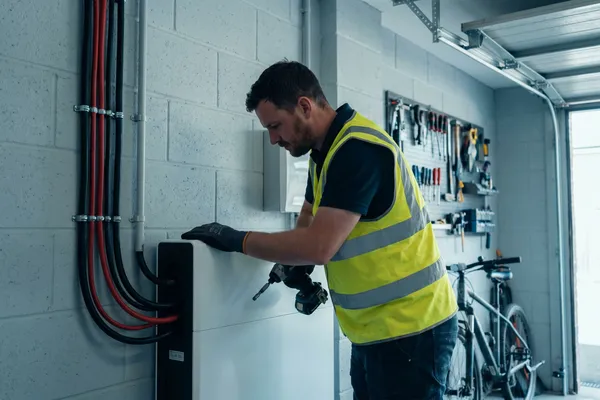
The home and commercial battery storage market has moved faster than the compliance side: installers swap out old Powerwalls and GivEnergy packs every week, importers rebrand product without checking producer obligations, and damaged cells sit in depots without a documented route. Regulators, the LFB and insurers have noticed.
Three Standard Packages, Quoted Per Job
Most installer battery jobs fit one of three shapes. Tell us which one you have and we quote it as a fixed job from real carrier costs, with the packaging, consignment note and treatment evidence included. We reply within one working day.
Intact-Unit Collection
Removed packs, warranty swaps and end-of-life units in sound condition, collected from site or depot in UN-rated packaging.
Damaged-Cell Package
Swollen, dented or suspect packs. UN-approved packaging with vermiculite, quarantine guidance and a hazardous route, handled with priority.
Site Clearance Survey
Depot accumulations and decommissioning jobs. Inventory, chemistry check and a staged clearance plan before anything moves.
Thanks, your quote request is in.
We’ll reply within one working day with a fixed job quote. Need us sooner? Email elliot@cellcomply.co.uk.
Home Solar & BESS Installers
- Removed Powerwall, GivEnergy, Fox ESS and Sunsynk packs to dispose of
- Damaged-on-arrival pack handling and quarantine area
- ADR-aware return route to suppliers or recyclers
- PAS 63100 placement aligned with hazardous-waste collection
C&I Battery Storage Installers
- Commercial BESS decommissioning and onward route documentation
- Hazardous waste duty of care for cabinet and rack removals
- ADR Chapter 1.3 awareness for staff moving Li-ion packs
- Fire risk assessment of compound storage at depot
Importers & Own-Brand Distributors
- Battery producer registration if 1+ tonne placed on UK market
- WEEE producer obligations for battery-containing electricals
- Packaging producer responsibility checks
- UN 38.3, IEC 62619 and IEC 62133 evidence on file
Service, Maintenance & O&M Contractors
- Swollen-cell escalation procedure for site visits
- Licensed waste carrier route for inter-site battery moves
- Consignment notes and Digital Waste Tracking readiness
- Records linking each removed pack to a final treatment site
Your Compliance Obligations
Solar and battery storage installers can be caught by battery producer responsibility, WEEE obligations, ADR Class 9 transport, hazardous waste duty of care and Digital Waste Tracking records.
UK Battery Regulations
Battery handling, disposal, and producer obligations under the Waste Batteries and Accumulators Regulations.
ADR Class 9: Dangerous Goods
Lithium batteries and some battery movements require suitable packaging, documentation, and trained staff.
WEEE Obligations
Battery-containing electrical equipment can create WEEE duties for storage, takeback, treatment, and evidence.
How We Help Solar & BESS Installers
Practical systems for swap-outs, damaged packs, decommissioning jobs, depot storage and multi-site compliance evidence.

Compliance Review & Setup
We map your install, swap-out and decommissioning operations against battery, WEEE, ADR and hazardous waste duties, and tell you exactly where evidence is thin.
Learn more
Bins & Collections
A documented collection route for removed and damaged Li-ion packs from customer sites, installer depots, and commercial BESS decommissioning jobs.
Learn more
Partner-Delivered Battery Safety Training
Engineer and yard-staff training on damaged-pack handling, thermal runaway warning signs, quarantine, and safe transport, aligned with ADR Chapter 1.3 awareness.
Learn moreClearing panels as well as packs? The solar panel disposal and recycling guide covers the WEEE route, palletising, costs and what treatment recovers, and the lithium battery disposal guide covers the battery side.
The solar installer one-pager
Compliant collection and recycling of solar panels, lithium batteries and inverters, on a single page. Covers what we take, how it works and why installers trust us. Handy to share with your team or a site manager.
Sound Familiar?
Common obligation scenarios for solar and battery storage installers.
You remove an old Powerwall during a customer upgrade
The old pack is now hazardous waste under your duty of care. It needs ADR-suitable packaging, a consignment note, a licensed carrier, and proof of where it went next. The new system is connected and earning, but the removed battery is still your problem until it leaves through a documented route.
We set up the swap-out workflow, paperwork pack, and partner collection route.A pack arrives swollen, dented or damp from transit
A damaged Li-ion pack on a job means engineers need a written quarantine procedure: separation from undamaged stock, fire-aware storage, a non-standard collection route, and supplier or insurance notification. A normal recycling bin is not appropriate.
We draft the damaged-pack SOP, quarantine spec and escalation route.You import or rebrand batteries placed on the UK market
Importing or first-placing batteries (or battery-containing systems) on the UK market can trigger producer registration, battery scheme membership, WEEE producer obligations and packaging duties, even if the units are sold through trade only.
We check your placed-on-market footprint and flag the registrations you need.UK homes with battery storage installed by end of 2025
UK homes with battery storage installed by end of 2025
PAS 63100 fire-safety standard for home battery storage took effect
Digital Waste Tracking extends to waste carriers and brokers from October 2027, after receiving sites in October 2026
Solar & BESS Installer Compliance FAQs
Common questions from installers, importers, and service contractors handling lithium battery storage systems.
We install solar and battery storage, so why do we need compliance support?
PAS 63100 and BS 7671 cover how the system is installed. They do not cover what happens to a removed Powerwall, GivEnergy or Fox ESS pack, a damaged battery on site, or imported product placed on the UK market. Those sit under the Waste Batteries Regulations, WEEE, ADR Class 9 transport, hazardous waste duty of care and producer responsibility, and the installer is usually the one holding the bag.
Is a removed home battery hazardous waste?
In most cases yes. A used or end-of-life lithium-ion battery from a customer property is treated as hazardous waste once you take possession of it. That triggers duty of care record-keeping, a licensed carrier, ADR-suitable packaging where applicable, and evidence of onward treatment. Digital Waste Tracking applies to receiving sites from October 2026, and from October 2027 it extends to waste carriers and brokers, which catches installers who carry their own removed packs. Jobs routed through Cell Comply are set up to be tracked by default when the mandate lands.
Do we need ADR-trained staff if we are only moving batteries between sites?
ADR Class 9 (UN 3480 / UN 3481) covers most home and commercial Li-ion packs. Even short van movements between an installer depot and a customer site, or between a customer site and a recycler, generally need ADR-aware packaging, documentation and Chapter 1.3 awareness training. Some movements need a fully ADR-certified driver. We help you identify which is which.
We import GivEnergy / Fox ESS / Sunsynk batteries. Does producer responsibility apply?
If you are the first business to place a battery (or a battery-containing product) on the UK market, for example, importing direct from manufacturer or selling under your own brand, you usually take on producer obligations. That can include battery producer registration, compliance scheme membership, WEEE producer registration and packaging duties. The duties are weight-banded and apply even to trade-only sellers.
What about damaged or swollen batteries during installation?
A damaged Li-ion pack should never go back to general stock or into a normal recycling stream. The thermal runaway risk means it needs immediate quarantine in a fire-aware location, separation from healthy packs, and a specialist non-standard collection route. We help you write the SOP, train your engineers and document the escalation.
How does this fit with PAS 63100:2024 and MCS?
PAS 63100 governs install location and fire safety. MCS covers installer competence and the install itself. We sit alongside, handling the lifecycle compliance the install standards do not: what happens to the battery when it leaves the property, how damaged stock is managed, and what registrations apply if you import or rebrand product.

Need a Battery Lifecycle Compliance System?
A compliance review maps your install, swap-out and decommissioning operations against UK battery, WEEE, ADR and hazardous waste duties, and gives you the SOPs, paperwork and partner routes to evidence them.