
Battery Takeback Compliance for UK Retailers
If you sell batteries, electrical goods, vapes, e-bikes, power tools, toys, or rechargeable products, you may need a compliant takeback route, safe storage process, and clear customer information. We make that practical at store level.
- 01 Guidance-led
- 02 Scope-bounded
- 03 Evidence-focused
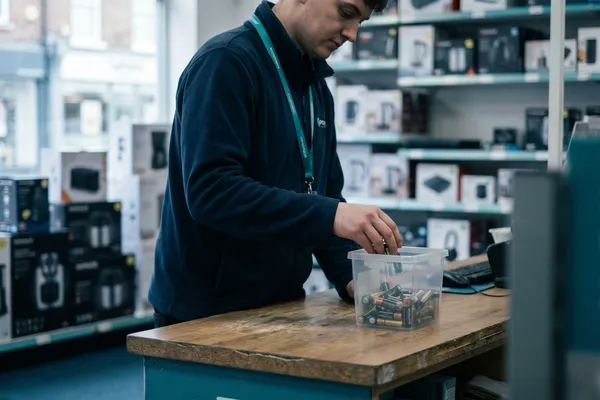
Battery recycling searches are often consumer-led, but the operational burden sits with retailers: collection points, staff handling, storage, carrier checks, and proof that batteries and electrical items are leaving stores through the right route.
High-Street Retailers
- In-store battery collection point where takeback duties apply
- Clear customer information at point of sale
- Safe stockroom storage for returned batteries
- Collection evidence from licensed waste contractors
Electrical & DIY Retailers
- WEEE distributor takeback for electrical products
- Battery collection for power tools, toys, and rechargeable devices
- Staff process for damaged or leaking batteries
- Producer checks for own-brand or imported products
Vape, E-Bike & Mobility Stores
- Lithium battery return procedure for higher-risk products
- Fire risk controls for returned devices
- ADR-aware collection route for bulk battery waste
- Consumer messaging for safe disposal
Retail Chains & Franchises
- Consistent takeback process across locations
- Store reviews and staff training records
- Centralised collection documentation
- Escalation process for damaged lithium batteries
Your Compliance Obligations
Retailers can be caught by battery takeback rules, WEEE distributor duties, producer obligations, ADR handling, and hazardous waste record keeping.
UK Battery Regulations
Battery handling, disposal, and producer obligations under the Waste Batteries and Accumulators Regulations.
ADR Class 9: Dangerous Goods
Lithium batteries and some battery movements require suitable packaging, documentation, and trained staff.
WEEE Obligations
Battery-containing electrical equipment can create WEEE duties for storage, takeback, treatment, and evidence.
How We Help Retailers
Practical systems for shop floors, stockrooms, collection partners, and multi-site compliance records.

Compliance Review & Setup
We identify which battery and WEEE takeback duties apply to your product range and store footprint.
Learn more
Bins & Collections
Collection routes and documentation for returned batteries from shops, stockrooms, and distribution points.
Learn more
Partner-Delivered Battery Safety Training
Store-team training for safe battery handling, storage, customer returns, and damaged battery escalation.
Learn moreSound Familiar?
Common obligation scenarios for retailers.
A customer drops a swollen battery at the till
Your team needs to know where it goes, who handles it, and when to escalate. A normal collection tube may not be appropriate for damaged lithium batteries.
We create a simple store procedure and train staff on safe handling.Your stores sell more than 32kg of batteries a year
Retailers selling more than 32kg of portable batteries annually must offer free takeback. For chains, the duty can apply quickly across categories like toys, power tools, vapes, and small electronics.
We check your product range and set up a compliant takeback route.Head office cannot prove collections across all branches
A collection bin is only useful if the business can evidence what happened next. Multi-site retailers need consistent records for carrier collections, store participation, and customer information.
We centralise documentation and identify stores with missing evidence.UK searches per month for battery retailers near me
UK searches per month for battery retailers near me
annual portable battery sales threshold for retailer takeback duties
Digital Waste Tracking begins for hazardous waste receiving sites
Retail Battery Takeback FAQs
Common questions from retailers selling batteries, electrical goods, vapes, power tools, and rechargeable products.
Do UK retailers have to collect used batteries?
Retailers selling more than 32kg of portable batteries per year must offer free in-store takeback for used portable batteries. The obligation can apply even if batteries are sold inside products, depending on the product range and volumes.
What does a battery takeback setup cost a retailer?
The standard model is a one-off setup per store covering the collection point, signage and staff process, then one flat all-in price per collection when the container is full, with the carrier and paperwork included. There are no monthly fees on the standard service, and both numbers are quoted for your store or estate on the setup call.
Do retailers selling electrical goods also have WEEE duties?
Yes. Retailers and distributors of electrical and electronic equipment may have WEEE takeback and customer information duties. Shops selling vapes, power tools, toys, e-bikes, and rechargeable devices can have overlapping WEEE and battery obligations.
How should a shop store returned batteries?
Returned batteries should be stored in a suitable container away from heat, water, general waste, and combustible material. Lithium batteries should not be crushed or mixed loosely with metal items. Damaged, swollen, hot, or leaking batteries need a separate escalation process.
Do staff need training?
Staff should understand which batteries can go into normal takeback containers, how to identify damaged lithium batteries, where returned items are stored, and who arranges collection. This is especially important for vapes, e-bike batteries, power tool batteries, and mobility products.
Can Cell Comply support a retail chain?
Yes. We can review a sample of stores, define a standard operating procedure, set up collection documentation, train store teams, and monitor ongoing evidence across a multi-site estate.

Need a Store-Level Battery Takeback System?
A compliance review maps what you sell, which takeback rules apply, and what your stores need to do to collect, store, and document battery waste safely.