
Takeback Bins & Flat-Price Collections for UK Businesses
Pay once to get set up properly: bins, the required signage, a simple logbook and a training session for your team. Then one flat all-in price per collection, charged only when a bin is full. No monthly fees. No per-kilo meters. You only pay when something happens.
What You Pay / What You Never Pay
Two numbers, agreed upfront: a one-off setup fee per store, and a flat all-in price per collection, quoted for your store or estate. That is the whole model.
What's Included
- One-off store setup Takeback bin(s), the in-store signage the regulations require, a simple logbook and SOP, and a training session for the owner or area manager.
- Flat-price collections A licensed ADR carrier collects when a bin is full. Carrier, hazardous waste consignment note and record-keeping all included in one flat price.
- Paperwork on the day The consignment note is handed over at collection, and weight data and recycling evidence follow into your duty of care file.
- Chain routing Stores in the same area are routed together on one run, with one account and one invoice for the estate.
What You Never Pay
- No monthly fees There is no subscription. If you want the ongoing admin fully managed, optional Compliance Cover exists, but it is never required.
- No per-kilo meters Nothing is weighed and billed per kilo. The price per collection is flat and agreed before anything moves.
- No container rental The bins are part of the one-off setup, not a recurring line on your invoice.
- No charges when nothing happens A quiet quarter costs you nothing. You pay when a bin is full and collected, not for the time in between.
Set Up Once. Then Pay Per Collection.
One visit sets your site up properly. After that, the only thing you ever pay for is a collection that actually happens.
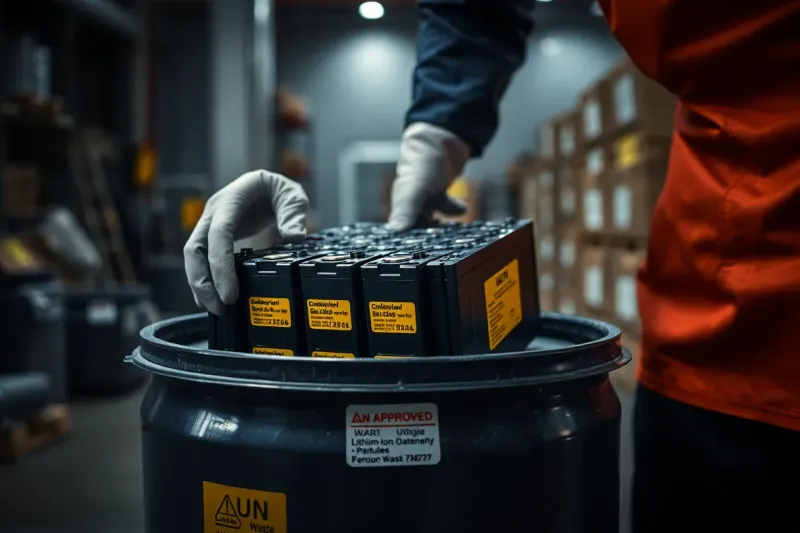
Takeback Bins Delivered
The right UN-approved containers for the streams you handle, from front-of-house vape tubes to 30L drums for battery packs, labelled and ready to use.
Signage, Logbook & SOP
The in-store signage the regulations require, plus a simple logbook and staff procedure, so the process is documented from day one.
Training for Your Team
A training session for the owner or area manager covering handling, storage and escalation, so the team is covered if Trading Standards or the Environment Agency ask.
Flat-Price Collections
When a bin is full, a licensed ADR carrier collects it for one flat all-in price. The hazardous waste consignment note is handed over on the day and the collection is logged.
Battery Types We Collect
We collect and dispose of every battery chemistry, each with the correct packaging, transport classification, and documentation.
Lithium-Ion (Li-ion)
Consumer electronics, e-bikes, vapes, power tools. UN3481 classification, requires fire-retardant packing materials for transport.
Lithium Primary
Non-rechargeable cells (CR2032, AA lithium). Higher thermal runaway risk. Packed with fire-retardant vermiculite.
Lead-Acid
UPS systems, forklifts, backup power. Classified as hazardous waste. Specialist containment for acid leakage.
EV & HEV Packs
Large-format traction batteries. Require specialist dismantling, bespoke crating, and ADR Class 9 transport.
Nickel-Based (NiMH / NiCd)
Legacy rechargeable cells. NiCd carries additional hazardous waste obligations under UK regulations.
Packaging & Storage We Provide
The one-off setup includes UN-approved containers and packing materials for your site, so your team can safely accumulate batteries between collections.
Lithium batteries must never be stored in general waste containers. Incorrect storage is a fire risk and a regulatory offence.
Do You Need Bins & Collections?
If any of these apply to your business, we can help.
You have waste lithium batteries on-site
Lithium batteries are classified as hazardous waste. They cannot go in general waste streams and require specialist collection.
You're paying monthly for waste you rarely produce
Subscription waste contracts charge whether anything happens or not. With us you pay a flat price per collection, only when a bin is full.
Your current carrier isn't ADR-capable
All carriers transporting lithium batteries must hold ADR credentials. Non-compliant transport risks prosecution.
You're missing documentation
Consignment notes, transfer records and recycling evidence are legally required. Every collection we arrange comes with them.
You handle large-format batteries
EV packs, UPS modules, and industrial cells need specialist dismantling and transport. We set up and document batteries of any size.
An insurer or customer is asking for proof
Supply chain compliance requirements are increasing. Our documentation gives you reviewable proof of proper disposal.
What Happens After Collection
Your batteries follow a fully documented chain of custody, from your site to licensed recycling and material recovery.
ADR Transport
Batteries are loaded into certified vehicles with full dangerous goods documentation and transported to licensed facilities.
Intake & Classification
Each consignment is logged, weighed, and classified by chemistry. Consignment notes are generated for your records.
Safe Processing
Batteries undergo controlled dismantling, discharge, and mechanical separation at permitted treatment facilities.
Material Recovery
Copper, cobalt, lithium, nickel, and aluminium are recovered for reuse. You receive a certificate confirming recycling rates.
What Businesses Must Do With Waste Lithium Batteries
Waste lithium batteries can never go in general waste or mixed recycling. This short guide covers the legal route: safe storage on site, collection by a licensed ADR carrier, treatment at a permitted facility, and the consignment notes that prove it all happened.
Documentation You'll Receive
Every collection includes the compliance paperwork required under UK hazardous waste regulations.
All documentation satisfies duty of care obligations and can be presented during regulatory inspections.
Hazardous Waste Consignment Note
Legally required record of each hazardous waste movement from your site.
Waste Transfer Note
Confirms transfer of waste between your business and the licensed carrier.
Certificate of Recycling
Proof that batteries were recycled at a permitted facility, with recycling rates achieved.
Collection Schedule & Records
Documented history of all collections: dates, volumes, battery types and carrier details.
ADR Transport Documentation
Dangerous goods transport documents for each consignment, including UN number classification.
Storage & Handling Guide
On-site guidance for your team on safe battery accumulation between collections.
How It Works
From first call to regular collections, a straightforward four-step process.
Book a Call
A short call to understand your streams, sites and volumes. We confirm your one-off setup and quote a flat all-in price per collection for your store or estate. No charge, no obligation.
Set Up Once
Bins arrive labelled and ready, the required signage goes up, the logbook and SOP are in place, and your owner or area manager gets a training session. Pay once and you are set up properly.
Request a Collection When a Bin Is Full
A licensed ADR carrier collects at the flat all-in price, hands over the hazardous waste consignment note on the day, and the collection is logged. Chain stores in the same area are routed together on one run.
Paperwork Lands on File
Consignment notes, weight data and recycling evidence go straight into your duty of care file, ready for any inspection.
Why CellComply
We set up and document the complexity of hazardous waste logistics, so you can focus on running your business.
Nationwide Collection Network
partner carriers covering every region of the UK. No matter where your sites are, we can reach them.
Flat All-In Collections
One flat price per collection: carrier, consignment note and record-keeping all included. Never per kilo, never a monthly fee.
All Battery Chemistries Accepted
From button cells to EV packs: lithium-ion, lead-acid, NiMH and NiCd. We have the containers and processes for each.
Digital Waste Tracking Ready
Our documentation systems are already aligned with DWT requirements, so you'll be compliant before the deadline.
Industries We Collect From
Specialist collection services tailored to your sector's battery types and volumes.
Bins & Collections FAQs
Common questions about the setup, the flat per-collection pricing, and what to expect.
What types of batteries can you collect?
We collect all battery chemistries: lithium-ion, lithium primary, lead-acid, nickel-metal hydride, nickel-cadmium, and alkaline. This includes everything from small portable cells and returned vapes to large-format EV and industrial battery packs.
How does the pricing work?
Two numbers, both agreed before anything happens. A one-off setup fee per store covers the bins, the required signage, the logbook and SOP, and a training session for your team. Then a flat all-in price per collection, quoted for your store or estate, charged only when a bin is full: carrier, consignment note and record-keeping all included. No monthly fees, nothing charged per kilo, and no container rental. Book a call and we will quote both for your sites.
Is there a subscription or monthly fee?
No. The default way to work with us is pay once for setup, then pay per collection. If a bin takes three months to fill, you pay nothing in between. Businesses that want the ongoing admin fully managed, records maintained, staff training refreshed, signage kept current, can add Compliance Cover as an optional extra, but it is never a requirement.
Do you provide the containers?
Yes. The one-off setup includes UN-approved containers appropriate for your battery types, including fire-retardant vermiculite packing for lithium chemistries. Containers are delivered to your site before the first collection.
What documentation do I receive?
Every collection includes a hazardous waste consignment note handed over on the day, plus weight data and recycling evidence for your records. These satisfy your duty of care obligations and can be presented during regulatory inspections or supply chain reviews.
How often will you collect?
Whenever a bin is full: you request the collection and we arrange it. Busy sites end up on a regular rhythm, quiet sites might call twice a year, and either way you only pay when a collection actually happens. One-off clearances and site decommissioning are also covered.
What happens to the batteries after collection?
Batteries are transported to licensed recycling facilities where they undergo safe processing. Materials including copper, cobalt, lithium, nickel, and aluminium are recovered for reuse. You receive a certificate confirming recycling rates achieved.
Ready to Get Set Up?
Book a call and we'll quote your one-off setup and a flat all-in price per collection for your store or estate. No monthly fees, no per-kilo meters, no obligation.