
UPS Batteries & Retired IT, Handled as One Documented Project
Every refresh cycle produces two streams: hazardous UPS and rack batteries, and retired servers, storage and GPU hardware that still hold data and value. We handle both: secure, documented disposal with certified data destruction through vetted, accredited partner facilities, and revenue share on remarketable kit returned to you.
- 01 Indicative quote within 24 hours
- 02 Revenue share on remarketable kit
- 03 CBDU640370 waste broker
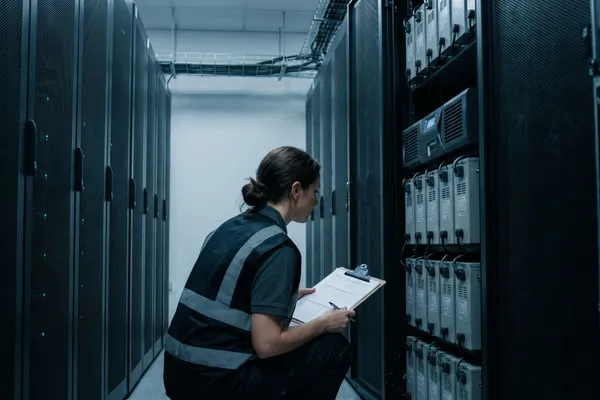
UPS battery replacement and hardware refresh are routine parts of data centre resilience planning, yet the compliance trail is often split between facilities, contractors, and waste carriers, and the resale value of retired kit quietly disappears. Cell Comply brings both streams together: battery movements, storage, disposal and recycling that stand up to scrutiny, plus itemised transparency on what was resold, recycled or destroyed, with certificates supplied. Send an asset list as a CSV, spreadsheet or photos and you get an indicative quote within 24 hours, with a named contact reachable on WhatsApp.
Colocation & Data Centre Operators
- Duty of care for UPS battery waste generated on site
- Contractor evidence for battery replacement and recycling
- Fire risk controls for battery rooms and temporary storage
- Digital Waste Tracking readiness for hazardous waste movements
Facilities & Critical Power Teams
- Safe isolation and labelling of removed battery strings
- Documented handover to licensed waste carriers
- ADR checks before batteries leave site
- Battery room storage procedures during phased replacement works
UPS Maintenance Contractors
- Waste carrier and broker responsibilities when arranging removals
- Consignment notes and transfer documentation
- ADR Chapter 1.3 awareness for staff involved in battery movement
- Clear evidence pack for client review trails
Multi-Site Infrastructure Estates
- Consistent battery disposal process across all locations
- Centralised records for ESG, insurance, and compliance reviews
- Scheduled collections aligned to UPS refresh programmes
- Supplier checks for recycling and downstream treatment routes
Your Compliance Obligations
Five regulatory frameworks shape how UPS batteries are stored, moved, replaced, and recycled in UK data centre environments.
UK Battery Regulations
Battery handling, disposal, and producer obligations under the Waste Batteries and Accumulators Regulations.
ADR Class 9: Dangerous Goods
Lithium batteries and some battery movements require suitable packaging, documentation, and trained staff.
WEEE Obligations
Battery-containing electrical equipment can create WEEE duties for storage, takeback, treatment, and evidence.
How We Help Data Centres
IT asset disposal with value recovery, flat-price battery collections, and compliance oversight across replacement cycles and refresh programmes.

IT Asset Disposal (ITAD)
Secure, documented disposal and value recovery for retired servers, storage, networking and GPU or AI hardware: certified data destruction through vetted, accredited partner facilities, and revenue share on remarketable kit.
Learn moreBins & Collections
Flat-price, ADR-aware collection and recycling documentation for end-of-life UPS batteries and backup power battery strings.
Learn more
Compliance Review & Setup
We review your UPS battery replacement workflow, contractor records, waste documentation, and site storage controls.
Learn moreSound Familiar?
Common obligation scenarios for data centre and critical infrastructure teams.
Your UPS refresh is being handled by three suppliers
Facilities, UPS maintenance, and waste contractors may each hold only part of the compliance record. If a regulator, client, insurer, or internal auditor asks for proof, gaps appear quickly.
We consolidate the chain of custody and tell you exactly what evidence is missing.Removed battery strings are waiting in a plant room
A phased replacement can leave batteries temporarily stored on site. Without labelling, segregation, fire controls, and a clear collection plan, that temporary store becomes a compliance and safety exposure.
We set up safe storage controls and arrange the compliant removal route.Your client asks for proof of responsible recycling
Enterprise and public-sector customers increasingly expect evidence for battery disposal, downstream recycling, and hazardous waste movements. A supplier invoice is rarely enough.
We provide a clear documentation pack for procurement, ESG, and review teams.from asset list to indicative ITAD quote: send a CSV, spreadsheet or photos and we respond within 24 hours
from asset list to indicative ITAD quote: send a CSV, spreadsheet or photos and we respond within 24 hours
waste streams in every refresh, hazardous battery strings and data-bearing IT, handled as one documented project
Digital Waste Tracking becomes mandatory for permitted waste receiving sites from October 2026
Data Centre Battery Compliance FAQs
Common questions from data centre operators, facilities teams, and UPS maintenance contractors.
Are UPS batteries hazardous waste?
Many end-of-life UPS batteries are handled as hazardous waste, especially lithium-ion and damaged battery units. Lead-acid batteries also require controlled collection and recycling. The correct classification depends on chemistry, condition, and how the batteries are being moved, so data centres should keep waste transfer or consignment documentation for every collection.
Do data centres need ADR-compliant transport for UPS batteries?
Lithium-ion UPS batteries are dangerous goods for transport and may require ADR-compliant packaging, labelling, documentation, and trained personnel. Some lead-acid batteries also have transport requirements. The key risk is assuming the UPS contractor has covered everything without checking the collection paperwork.
What does UPS battery disposal cost for a data centre?
Standard removals are priced as flat all-in collections, quoted for your site or estate, with the ADR-aware transport, consignment notes and record-keeping included. Where a refresh also retires servers, storage or GPU hardware, the IT asset disposal side runs open book with a revenue share on remarketable kit, so on larger projects the rebate can offset the battery disposal cost. Send the asset list and you get an indicative quote within 24 hours.
How should removed UPS batteries be stored before collection?
Keep removed batteries in a designated, ventilated, dry area away from ignition sources and general waste. Damaged or suspect lithium batteries should be isolated, terminals protected, and collection arranged promptly. Staff should know who is responsible for the temporary store and what to do if a battery shows heat, swelling, leakage, or damage.
How will Digital Waste Tracking affect data centres?
Digital Waste Tracking replaces paper-based waste movement records in phases: permitted waste receiving sites must use it from October 2026, with waste carriers and brokers following from October 2027. Data centres generating hazardous battery waste should prepare by checking who creates records, who confirms receipt, and how evidence is stored against each site and project.
Can Cell Comply work alongside our UPS maintenance provider?
Yes. We do not need to replace your UPS maintenance contractor. We check the compliance trail around battery removal, storage, transport, recycling, and documentation so your facilities team has independent assurance.
Can you handle the servers and GPU hardware as well as the batteries?
Yes. Retired servers, storage arrays, networking and GPU or AI compute hardware go through our IT asset disposal service: certified data destruction through vetted, accredited partner facilities, serial-matched reporting, and a revenue share on remarketable kit returned to you. Send an asset list as a CSV, spreadsheet or photos and you get an indicative quote within 24 hours, with a named contact reachable on WhatsApp, and an itemised statement at the end showing what was resold, recycled or destroyed, with certificates supplied. The UPS strings and rack batteries move as hazardous waste on the same documented project.

Planning a UPS Refresh or Hardware Decommission?
Send us the asset list, as a CSV, spreadsheet or photos, and we return an indicative quote within 24 hours: hazardous battery streams handled with full documentation, certified data destruction on everything that holds data, and revenue share on the kit that still has value.