
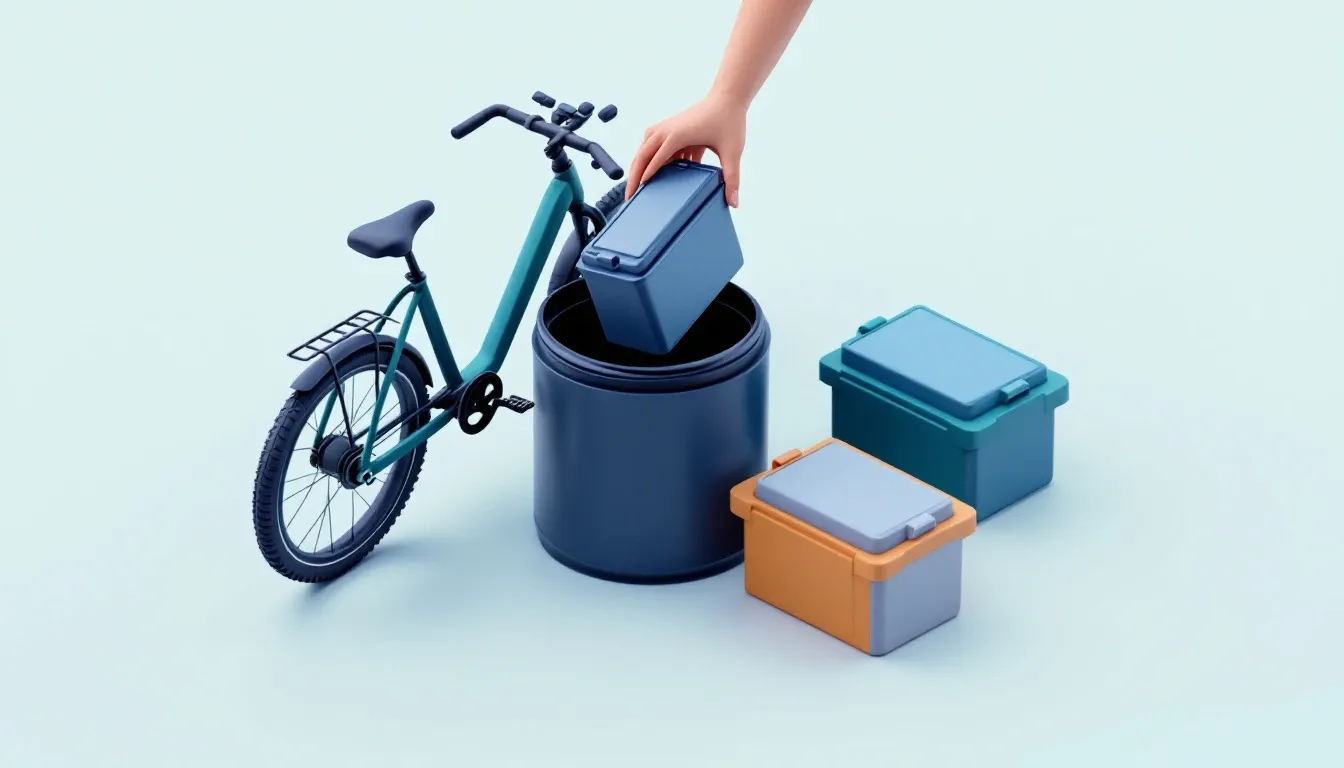
The Short Answer
E-bike battery disposal in the UK has one absolute rule: the pack must never go in a bin. An e-bike battery is a large lithium-ion pack, it is routinely classified as hazardous waste at end of life, and crushed lithium cells ignite.
For riders, the route is takeback: the retailer or brand you bought from, or a household waste recycling centre that confirms it accepts e-bike batteries. For bike shops, workshops and fleets, the route is a proper container on site and a licensed hazardous waste collection when it fills, with a consignment note for every movement.
If you run a bike business, the e-bike and e-scooter page covers the whole setup: a UN-approved drum with a fire-suppressant vermiculite layer, delivered to your shop, and one flat price per collection when it is full.
Why E-Bike Batteries Are a Different Problem
A typical e-bike pack stores several hundred watt-hours across dozens of cells, many times the energy of a phone or power tool battery. When a pack is dead, damaged or waterlogged, three things follow:
- It is hazardous waste. Waste lithium batteries are routinely classified as hazardous, which means duty of care record-keeping, a licensed carrier and a hazardous waste consignment note for each movement.
- It is a dangerous good in transport. Lithium packs move by road under ADR Class 9 rules, and ordinary parcel carriers and general waste contractors will not take them.
- It is a fire risk while it waits. London Fire Brigade attended record numbers of e-bike and e-scooter battery fires in 2025, and batteries that end up in the waste stream keep starting fires further down the line: our UK battery fire tracker has logged more than 90 battery-linked waste and recycling fires at the time of writing.
That combination is why the pile of dead packs in the corner of a bike shop is not a storage quirk. It is an uninsured risk with no legal exit route until a compliant collection is arranged.
Disposal Routes for Riders
If you own an e-bike, you have three legitimate routes:
- Retailer takeback. Shops selling more than 32kg of portable batteries a year must take waste batteries back free of charge, and many bike shops accept packs regardless because they have a route out. Start with the shop that sold you the bike or battery.
- Brand and manufacturer schemes. Several e-bike and battery brands run their own return schemes through dealers. Check the brand’s website or ask the dealer.
- Household waste recycling centres. Some accept e-bike batteries, some do not, and damaged packs are often refused. Phone or check the council page before travelling.
Never put a pack in the household bin or kerbside recycling, never post one, and if the pack is swollen, hot or damaged, treat it as an emergency-in-waiting rather than a disposal errand: our guide on what to do with a swollen e-bike battery covers the immediate steps.
Disposal for Bike Shops, Workshops and Fleets
Customer hand-ins, upgrade swaps, crash-damaged packs and waterlogged commuter batteries all accumulate, and no normal carrier will take them. The compliant setup is simple:
- A proper container. A UN-approved drum with a fire-suppressant vermiculite layer, kept away from heat, exits and combustibles. Sound packs go in; damaged packs are isolated separately.
- A simple process. A logbook of what came in, terminal protection on loose packs, and an escalation step for anything swollen, hot or leaking. Partner-delivered battery safety training covers staff awareness, which has been mandatory for those handling dangerous goods since July 2025.
- Collection when full. A licensed ADR carrier collects the drum, the hazardous waste consignment note is handed over on the day, and the paperwork lands in your duty of care file.
Cell Comply arranges exactly this for e-bike businesses: the drum and setup once, then one flat all-in price per collection, only when the drum is full. No subscription, nothing per kilo. The full offer is on the e-bike and e-scooter page.
What Happens to the Packs
At a permitted treatment facility, packs are discharged and dismantled, cells are separated from casings and electronics, and the materials are recovered: aluminium and steel from housings, copper from windings and wiring, and the black mass that carries the lithium, nickel and cobalt back into battery supply chains. Your evidence of treatment closes the loop on the duty of care.
What E-Bike Battery Disposal Costs
For riders, takeback routes are usually free.
For businesses, beware of two pricing patterns: per-kilo meters, which reward the contractor when more of your waste moves, and monthly waste subscriptions, which charge you whether anything happens or not. Cell Comply prices the other way: a one-off setup for the drum and process, then one flat all-in price per collection, quoted for your shop upfront and charged only when the drum is full, with the carrier, consignment note and record-keeping included. Damaged or swollen packs are specialist movements and are quoted per job before anything moves.
Frequently Asked Questions
How do I dispose of an e-bike battery in the UK?
Riders: retailer or brand takeback, or a recycling centre that confirms it accepts e-bike batteries. Businesses: a suitable container on site and a licensed hazardous waste collection with a consignment note. Never the bin.
Can e-bike batteries go in the bin?
No. Crushed lithium cells short-circuit and ignite, and batteries in the waste stream are a leading cause of bin lorry and recycling fires. For businesses it also breaches the duty of care and hazardous waste rules.
Are e-bike batteries recyclable?
Yes. Treatment facilities recover the metals and the lithium-bearing black mass, and businesses receive evidence of treatment for their records.
What about the rest of the e-bike?
A scrapped e-bike is treated as more than scrap metal: batteries must be removed by hand before any mechanical treatment, and the Environment Agency has set out how end-of-life e-bikes should be coded and handled. Remove the pack first, then the cycle parts can follow normal WEEE and scrap routes.
Got Dead Packs Piling Up?
Cell Comply sets bike businesses up with a UN-approved drum and flat-price collections: pay once for setup, then one all-in price per collection when the drum is full, consignment note included.