
The Short Answer
Solar panel disposal in the UK means treating panels as electrical waste, not general waste. Panels are classified as Waste Electrical and Electronic Equipment (WEEE), so they cannot go in a skip, a general bin or to a scrap dealer.
The compliant route is simple to describe: a licensed carrier collects the panels and takes them to an approved facility that recovers the glass, aluminium, silicon and metals.
For a business, the part that matters beyond removal is the evidence. You need to be able to show the panels were handled lawfully and recycled.
If you are clearing panels from a site or a project, our bins and collections service arranges compliant removal and recycling, and this guide explains how the process works.
Can You Put Solar Panels in a Skip or Send Them for Scrap?
No. Because solar panels are WEEE, a business cannot lawfully put them in a general skip, a waste bin or send them to a scrap metal dealer.
Doing so breaches the waste duty of care and leaves you with no proof that the waste was handled correctly.
There is also real value locked inside a panel. Glass, aluminium, copper and small amounts of silver are all recoverable, and sending panels for proper treatment keeps those materials in use.
Producer responsibility also applies in the background. The producers who place panels on the UK market carry obligations to help finance take-back and recycling, which is why the UK has a producer responsibility system for electrical equipment.
How to Dispose of Solar Panels in the UK
The compliant route for solar panel disposal follows four steps. Installers will already handle the first one as part of a job.
1. Safely remove and de-energise the panels
Panels should be disconnected and removed by a competent installer. The system is shut down and de-energised first, then the panels, mounting and wiring come off the roof or array.
2. Identify the panel type
Most UK panels are crystalline silicon, which are non-hazardous WEEE. Some older or specialist thin-film panels can contain materials that make them hazardous waste.
This matters because it changes the documentation and the handling. If you are unsure, treat it as a question to resolve before collection, not after.
3. Arrange a licensed collection
Panels must be collected by a licensed waste carrier. Cell Comply works as a registered waste broker and dealer, so we arrange and coordinate the collection through a licensed carrier and a permitted facility.
That means you get an independent route focused on compliance and evidence, rather than a single recycler selling their own plant.
4. Send panels to an approved facility
The panels go to a facility approved to receive and treat them. This is where the materials are recovered, and where your evidence of recycling comes from.
If you also need a compliance review of how your waste streams are handled, that can be set up alongside the collection.
Solar Panel Recycling: What Actually Happens
Solar panels are highly recyclable. Modern treatment can recover the large majority of a panel by weight, which is why they are sent to specialist recyclers rather than landfill.
A typical crystalline silicon panel is mostly glass and an aluminium frame, with smaller amounts of silicon, copper, silver and polymer. At an approved facility:
- the aluminium frame and junction box are removed first
- the glass is separated and recovered
- the silicon wafers, copper and silver are processed and recovered
- the recovered materials are sold back into manufacturing
The result is that very little goes to waste, and the materials re-enter the supply chain. This is the difference between disposal and recovery, and it is the part that supports a business’s sustainability reporting.
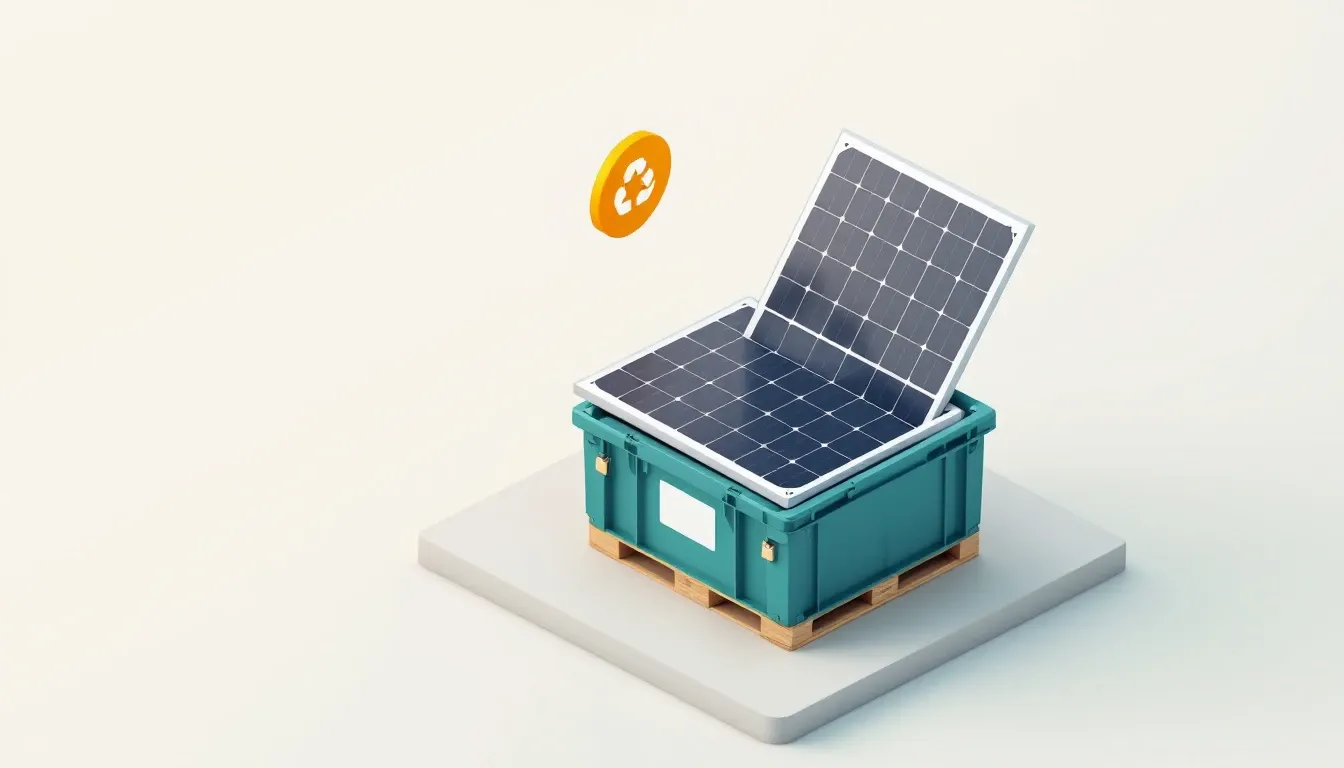
How to Palletise Solar Panels for Collection
Preparation is the part of the job you control, and it makes a real difference to the price and to how smoothly collection day goes. The aim is a load a driver can check and lift in minutes.
- Stack flat on a sturdy pallet, panels of the same size together, glass to glass or with cardboard or foam sheets between them.
- Protect the corners and edges, which is where transit damage starts, and tuck connectors and cables inside the stack rather than leaving them trailing.
- Strap the stack to the pallet so nothing shifts, and keep the height to what the pallet and your forklift or tail-lift can safely take.
- Keep broken panels separate and wrap them so glass cannot shed during handling, and tell us about them when booking so the carrier arrives prepared.
- Keep the stack dry where possible, since wet stacked glass is slippery to handle and heavier to move.
If a job cannot be palletised, say a rooftop strip-out with no forklift on site, that is fine. It just needs to be scoped in the quote rather than discovered on the day.
What Solar Panel Disposal and Recycling Costs
There is no single market price for solar panel disposal, because it depends on the job. The main factors are:
- Volume, or how many panels are being collected
- Access and location, since transport distance to an approved facility affects cost
- Preparation, because palletised, forklift-ready loads collect faster than loose stacks
- Condition, as broken or damaged panels need more careful handling
- Panel type, because hazardous thin-film panels need a different route
- Documentation and reporting needs
With Cell Comply the structure is simple: one flat all-in price per collection, quoted for your job or your estate before anything moves, with the licensed carrier, the paperwork and the record-keeping included. Nothing is priced per kilo, and there are no monthly fees. A single domestic array is a different job from a commercial roof or a decommissioned solar farm, so the useful next step is a quote based on the actual volume and site.
Documentation and ESG-Ready Reporting
Disposal is finished when you hold the evidence, not when the panels leave site. For most crystalline silicon panels, which are non-hazardous WEEE, that means a waste transfer note plus evidence of recycling from the facility. Hazardous thin-film panels move under a hazardous waste consignment note instead.
Either way, keep:
- the carrier and broker details
- the receiving facility details
- the weight of panels collected
- evidence or a certificate of recycling
That weight and recovery data is not just for compliance. It feeds directly into sustainability and ESG reporting, which is increasingly what installers’ own clients ask for. Being able to report how many tonnes were recovered, and what happened to them, turns a disposal cost into a reporting asset.
Record keeping is also tightening. Under Digital Waste Tracking, waste movements will be logged digitally as the service rolls out from October 2026, so cleaner records now make that transition easier.
Solar Battery Disposal: The Storage System Is a Different Waste Stream
Panels rarely come off on their own. When a battery storage system is removed alongside the array, the packs follow a stricter route than the glass:
- Lithium battery packs are routinely classified as hazardous waste. They cannot travel on the panel paperwork; each movement needs a hazardous waste consignment note.
- Transport is a dangerous-goods question. Lithium packs move under ADR rules through a carrier authorised for lithium loads, and damaged or swollen packs need UN-approved packaging with the damage declared before anything moves.
- Storage between removal and collection matters. Keep removed packs dry, terminal-protected and away from combustibles, and isolate anything damaged.
Are solar batteries recyclable? Yes: at permitted treatment facilities the packs are processed to recover metals including copper, nickel and the lithium-bearing black mass, and you receive evidence of treatment for your records. The full route is covered in our lithium battery disposal guide.
Cell Comply arranges the battery side at one flat all-in price per collection, alongside the panel uplift, so a full system decommission runs as one documented project with one set of paperwork.
Solar Panel Disposal for Installers and Businesses
For solar and battery storage installers, panel disposal is part of the job, not an afterthought. Removing an old array, upgrading a system or decommissioning a site all leave panels that need a compliant route, and often a storage system that needs its own.
Handling both through one coordinated collection keeps the paperwork together and gives the end client a single, clear record of what was recovered.
Frequently Asked Questions
How do you dispose of old solar panels in the UK?
Solar panels are classified as WEEE, so they cannot go in a skip, a general bin or to a scrap dealer. They must be collected by a licensed waste carrier and taken to an approved facility that recovers the glass, aluminium, silicon and metals. Businesses should keep a waste transfer note and evidence of recycling.
Can solar panels be recycled?
Yes. Most of a solar panel can be recycled. Modern treatment recovers the bulk of a panel by weight, including glass, the aluminium frame, copper, silicon and small amounts of silver, and the recovered materials go back into manufacturing.
Can you put solar panels in a skip?
No. Because solar panels are WEEE, putting them in a skip or sending them to a scrap dealer is not a compliant route for a business and breaches the duty of care. They must be collected by a licensed carrier and processed at an approved facility.
What happens to recycled solar panels?
At an approved facility, panels are dismantled and separated into their materials. The aluminium frame and junction box are removed, then the glass, silicon, copper and silver are recovered and sold back into manufacturing. The business receives evidence of the weight recycled.
Need Solar Panels Collected and Recycled Compliantly?
Cell Comply arranges licensed collection and recycling for end-of-life solar panels, and gives you the weight data and evidence you need for compliance and ESG reporting.